
We Need Smarter Kitchen Storage (Because We Own More Stuff Than Ever)
Let’s be honest. Americans have a lot of kitchen stuff. Somewhere along the way, our kitchens evolved from a place to prepare meals into command centers for modern life. We have coffee stations, smoothie blenders, air fryers, stand mixers, Instant Pots, water bottles for every member of the family, reusable food containers (without their matching lids), enough coffee mugs to supply a small café, and that one drawer full of gadgets we’re convinced we’ll need someday.
It’s no wonder that even beautiful kitchens can start to feel… crowded.

How Much Is Actually in the Average Kitchen?
While you’ve probably heard the oft-quoted claim that the average American home contains 300,000 items, researchers have pointed out that the exact source of that statistic has never been confirmed. What is well documented is that Americans own, and continue to buy, an incredible amount of household goods. Professional organizers and researchers alike agree that today’s homes are fuller than ever, and our kitchens are often the biggest contributors.
A typical American kitchen can easily contain hundreds of individual items, including:
- 50-100 pieces of flatware and everyday utensils
- 20-40 glasses, mugs, and drinkware
- Dozens of plates, bowls, and serving pieces
- 20-50 food storage containers
- 40-80 pantry items and spices
- Multiple countertop appliances, cookware, bakeware, and specialty gadgets
The real challenge isn’t owning these things; it’s finding a place for them because today’s kitchen isn’t just where we cook; it’s where we start the morning with coffee, pack lunches, help with homework, charge our phones, pay bills, unload groceries, entertain friends, feed the dog, and sort the mail. In essence, the kitchen has become the unofficial headquarters of everyday life.

The Goal Isn’t Owning Less
Over the past several years, we’ve been fascinated by decluttering. Television shows, organizing experts, and social media influencers have encouraged us to simplify, purge, and embrace minimalism. But here’s the catch: most families don’t actually want an empty kitchen; they want a functional one.

They still want to bake Christmas cookies with the grandchildren. They still want the roasting pan that’s been in the family for twenty years. They still want the espresso machine, the air fryer, the blender, the holiday platters, the popcorn maker for movie night, and the cookie cutters they only use once every December. The goal isn’t to own less; it’s to stop feeling like our belongings are taking over the room. That’s where thoughtful cabinetry makes all the difference.
Somewhere Along the Way, the Pantry Took on a Life of Its Own
Every pantry starts with good intentions: a few shelves; a handful of spices; pasta; cereal; and some canned goods. Fast-forward a few years and it’s a completely different story. The cinnamon is hiding behind three bags of flour. There are six varieties of pasta but no spaghetti. You accidentally bought paprika twice because you couldn’t see the one you already owned. And somewhere in the back is the waffle maker you forgot you had.
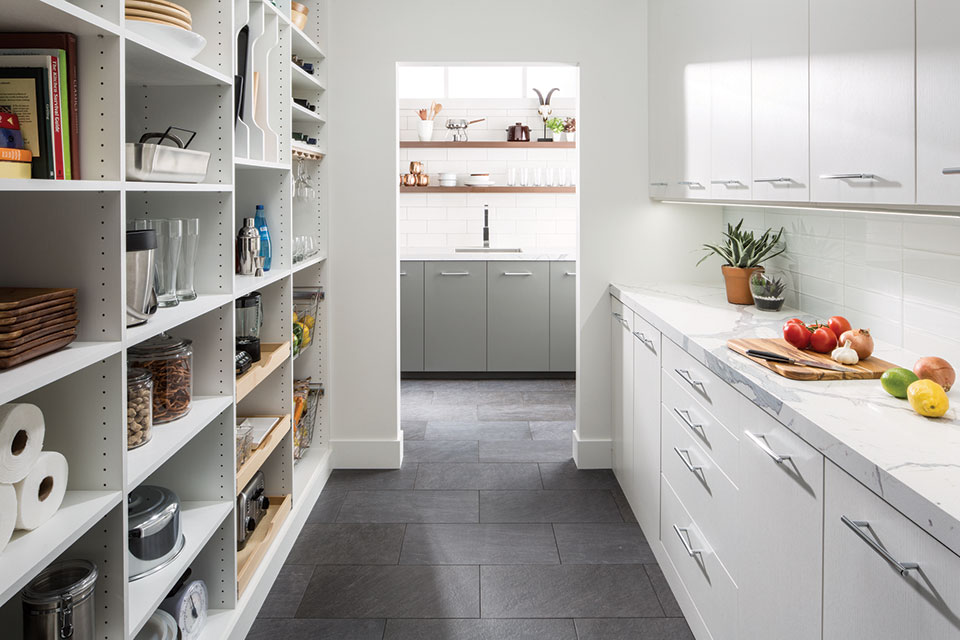
Modern cabinetry recognizes that pantries aren’t just closets anymore; they’re working storage systems. Pull-out pantry cabinets, adjustable shelving, and tiered storage make it easier to see everything at a glance, reducing waste and making meal preparation less of a treasure hunt. Storage accessories offered by manufacturers such as Merillat are designed to keep frequently used ingredients visible and within easy reach instead of disappearing into the back of deep shelves.
Countertops Weren’t Meant to Be Storage Units
Take a look around your kitchen. How many appliances live on the countertop? There might be a coffee maker, toaster, air fryer, or mixer? What else do you see? Paper towels? A knife block? Charging cables? Maybe a basket that has become home to sunglasses and odds and ends?

Somewhere along the way, countertops stopped being places to prepare food and became places to store things. One of today’s smartest cabinetry trends is giving those everyday items a place to disappear without making them difficult to access. Appliance garages conceal coffee makers and toasters behind lift-up doors, while integrated charging stations keep phones and tablets powered up without cords stretching across the island. Medallion Cabinetry, for example, offers appliance storage solutions that keep the things you use every day conveniently accessible while maintaining a clean, uncluttered look.
The Junk Drawer Isn’t the Problem
Every kitchen has a drawer filled with scissors, batteries, birthday candles, twist ties, tape, chip clips, rubber bands, pens that may or may not work, and at least three Allen wrenches from furniture you assembled five years ago. The junk drawer isn’t at fault – it’s just trying to do too much. Often, clutter isn’t caused by owning too much.
It’s caused by not having a designated place to put things.
Custom drawer organizers, utensil dividers, knife blocks, spice inserts, and storage trays transform chaotic drawers into spaces that actually make sense. Many cabinetry collections, including those from Fabuwood and Woodmont Cabinetry, offer built-in organizational accessories that help eliminate countertop clutter while making everyday cooking just a little bit easier.

We Own More Water Bottles Than Anyone Needs
No judgment. Every family has that cabinet filled with travel mugs, insulated tumblers, and kids’ water bottles from three different soccer seasons. Somehow, they all multiply overnight. Deep drawers with adjustable dividers and customizable storage make it much easier to organize oversized drinkware and reusable containers than traditional upper cabinets ever could. It’s one of those small design decisions that makes a surprisingly big difference in everyday life.
Cookbooks Aren’t Going Anywhere
For years, everyone predicted that recipes would move entirely online. Yet many of us still reach for the cookbook our grandmother gave us, the well-loved baking book with flour on the pages, or the newest cookbook we couldn’t resist buying because the photography was beautiful. Cookbooks have become part recipe collection, part family history.
That’s why we’re seeing more homeowners incorporate built-in cookbook shelves and display niches directly into their cabinetry. Instead of hiding treasured books in another room, they’re becoming part of the personality of the kitchen itself, proof that not everything needs to be tucked behind closed doors. The trick is deciding what deserves to be displayed and what deserves to disappear.

Even the Dog Has Claimed Space in the Kitchen
If you have a dog, you know what we’re talking about: food bins, treat jars, bowls, supplements, leashes and more. Somehow it all migrates to the kitchen. One of the more charming trends in cabinetry design is the built-in pet feeding station. Integrated drawers or toe-kick feeding stations keep bowls neatly tucked away when they’re not in use, while dedicated storage keeps food and treats organized instead of taking over a pantry shelf. Medallion even offers a thoughtfully designed pet station that proves good design isn’t just for the humans in the house.

The Best Kitchens Aren’t Empty. They’re Intentional.
Beautifully designed kitchens feel calming because every item has a home. The stand mixer doesn’t live on the counter because it has a pull-out shelf.
The cookie sheets aren’t piled in a cabinet because they have vertical dividers. The coffee maker disappears behind an appliance garage. The phone charges inside a drawer instead of next to the fruit bowl. The dog’s food station becomes part of the cabinetry instead of an afterthought.

Good kitchen design isn’t about hiding your life. It’s about designing cabinetry that supports it. At Swartz Kitchens & Baths, that’s one of the most rewarding parts of the design process. Every family cooks differently. Every household has its own routines, collections, hobbies, pets, and traditions. The right cabinetry isn’t about making every kitchen look the same, but rather about making each kitchen work beautifully for the people who use it every day. For us, the goal is not that you own less; it’s to enjoy your kitchen more.
We Need Smarter Kitchen Storage (Because We Own More Stuff Than Ever)
Let’s be honest. Americans have a lot of kitchen stuff. Somewhere along the way, our kitchens evolved from a place to prepare meals into command centers for modern life. We have coffee stations, smoothie blenders, air fryers, stand mixers, Instant Pots, water bottles for every member of the family, reusable food containers (without their matching lids), enough coffee mugs to supply a small café, and that one drawer full of gadgets we’re convinced we’ll need someday.It’s no wonder that even beautiful kitchens can start to feel… crowded.
How Much Is Actually in the Average Kitchen?
While you’ve probably heard the oft-quoted claim that the average American home contains 300,000 items, researchers have pointed out that the exact source of that statistic has never been confirmed. What is well documented is that Americans own, and continue to buy, an incredible amount of household goods. Professional organizers and researchers alike agree that today’s homes are fuller than ever, and our kitchens are often the biggest contributors.
A typical American kitchen can easily contain hundreds of individual items, including:
- 50-100 pieces of flatware and everyday utensils
- 20-40 glasses, mugs, and drinkware
- Dozens of plates, bowls, and serving pieces
- 20-50 food storage containers
- 40-80 pantry items and spices
- Multiple countertop appliances, cookware, bakeware, and specialty gadgets
The real challenge isn’t owning these things; it’s finding a place for them because today’s kitchen isn’t just where we cook; it’s where we start the morning with coffee, pack lunches, help with homework, charge our phones, pay bills, unload groceries, entertain friends, feed the dog, and sort the mail. In essence, the kitchen has become the unofficial headquarters of everyday life.
The Goal Isn’t Owning Less
Over the past several years, we’ve been fascinated by decluttering. Television shows, organizing experts, and social media influencers have encouraged us to simplify, purge, and embrace minimalism. But here’s the catch: most families don’t actually want an empty kitchen; they want a functional one.
They still want to bake Christmas cookies with the grandchildren. They still want the roasting pan that’s been in the family for twenty years. They still want the espresso machine, the air fryer, the blender, the holiday platters, the popcorn maker for movie night, and the cookie cutters they only use once every December. The goal isn’t to own less; it’s to stop feeling like our belongings are taking over the room. That’s where thoughtful cabinetry makes all the difference.
Somewhere Along the Way, the Pantry Took on a Life of Its Own
Every pantry starts with good intentions: a few shelves; a handful of spices; pasta; cereal; and some canned goods. Fast-forward a few years and it’s a completely different story. The cinnamon is hiding behind three bags of flour. There are six varieties of pasta but no spaghetti. You accidentally bought paprika twice because you couldn’t see the one you already owned. And somewhere in the back is the waffle maker you forgot you had.
Modern cabinetry recognizes that pantries aren’t just closets anymore; they’re working storage systems. Pull-out pantry cabinets, adjustable shelving, and tiered storage make it easier to see everything at a glance, reducing waste and making meal preparation less of a treasure hunt. Storage accessories offered by manufacturers such as Merillat are designed to keep frequently used ingredients visible and within easy reach instead of disappearing into the back of deep shelves.
Countertops Weren’t Meant to Be Storage Units
Take a look around your kitchen. How many appliances live on the countertop? There might be a coffee maker, toaster, air fryer, or mixer? What else do you see? Paper towels? A knife block? Charging cables? Maybe a basket that has become home to sunglasses and odds and ends?
Somewhere along the way, countertops stopped being places to prepare food and became places to store things. One of today’s smartest cabinetry trends is giving those everyday items a place to disappear without making them difficult to access. Appliance garages conceal coffee makers and toasters behind lift-up doors, while integrated charging stations keep phones and tablets powered up without cords stretching across the island. Medallion Cabinetry, for example, offers appliance storage solutions that keep the things you use every day conveniently accessible while maintaining a clean, uncluttered look.
The Junk Drawer Isn’t the Problem
Every kitchen has a drawer filled with scissors, batteries, birthday candles, twist ties, tape, chip clips, rubber bands, pens that may or may not work, and at least three Allen wrenches from furniture you assembled five years ago. The junk drawer isn’t at fault – it’s just trying to do too much. Often, clutter isn’t caused by owning too much.
It’s caused by not having a designated place to put things.
Custom drawer organizers, utensil dividers, knife blocks, spice inserts, and storage trays transform chaotic drawers into spaces that actually make sense. Many cabinetry collections, including those from Fabuwood and Woodmont Cabinetry, offer built-in organizational accessories that help eliminate countertop clutter while making everyday cooking just a little bit easier.
We Own More Water Bottles Than Anyone Needs
No judgment. Every family has that cabinet filled with travel mugs, insulated tumblers, and kids’ water bottles from three different soccer seasons. Somehow, they all multiply overnight. Deep drawers with adjustable dividers and customizable storage make it much easier to organize oversized drinkware and reusable containers than traditional upper cabinets ever could. It’s one of those small design decisions that makes a surprisingly big difference in everyday life.
Cookbooks Aren’t Going Anywhere
For years, everyone predicted that recipes would move entirely online. Yet many of us still reach for the cookbook our grandmother gave us, the well-loved baking book with flour on the pages, or the newest cookbook we couldn’t resist buying because the photography was beautiful. Cookbooks have become part recipe collection, part family history.
That’s why we’re seeing more homeowners incorporate built-in cookbook shelves and display niches directly into their cabinetry. Instead of hiding treasured books in another room, they’re becoming part of the personality of the kitchen itself, proof that not everything needs to be tucked behind closed doors. The trick is deciding what deserves to be displayed and what deserves to disappear.
Even the Dog Has Claimed Space in the Kitchen
If you have a dog, you know what we’re talking about: food bins, treat jars, bowls, supplements, leashes and more. Somehow it all migrates to the kitchen. One of the more charming trends in cabinetry design is the built-in pet feeding station. Integrated drawers or toe-kick feeding stations keep bowls neatly tucked away when they’re not in use, while dedicated storage keeps food and treats organized instead of taking over a pantry shelf. Medallion even offers a thoughtfully designed pet station that proves good design isn’t just for the humans in the house.
The Best Kitchens Aren’t Empty. They’re Intentional.
Beautifully designed kitchens feel calming because every item has a home. The stand mixer doesn’t live on the counter because it has a pull-out shelf.
The cookie sheets aren’t piled in a cabinet because they have vertical dividers. The coffee maker disappears behind an appliance garage. The phone charges inside a drawer instead of next to the fruit bowl. The dog’s food station becomes part of the cabinetry instead of an afterthought.
Good kitchen design isn’t about hiding your life. It’s about designing cabinetry that supports it. At Swartz Kitchens & Baths, that’s one of the most rewarding parts of the design process. Every family cooks differently. Every household has its own routines, collections, hobbies, pets, and traditions. The right cabinetry isn’t about making every kitchen look the same, but rather about making each kitchen work beautifully for the people who use it every day. For us, the goal is not that you own less; it’s to enjoy your kitchen more.